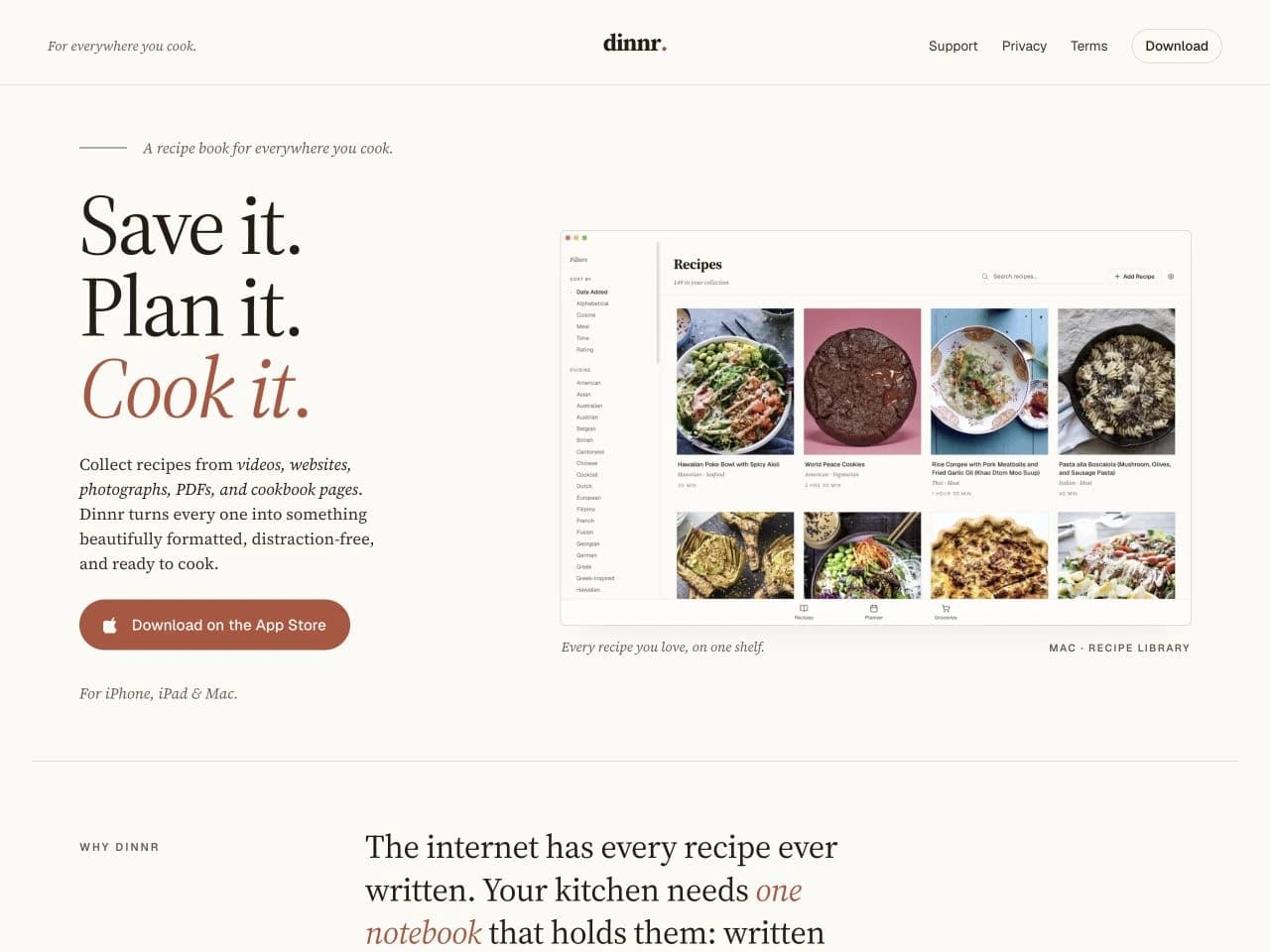
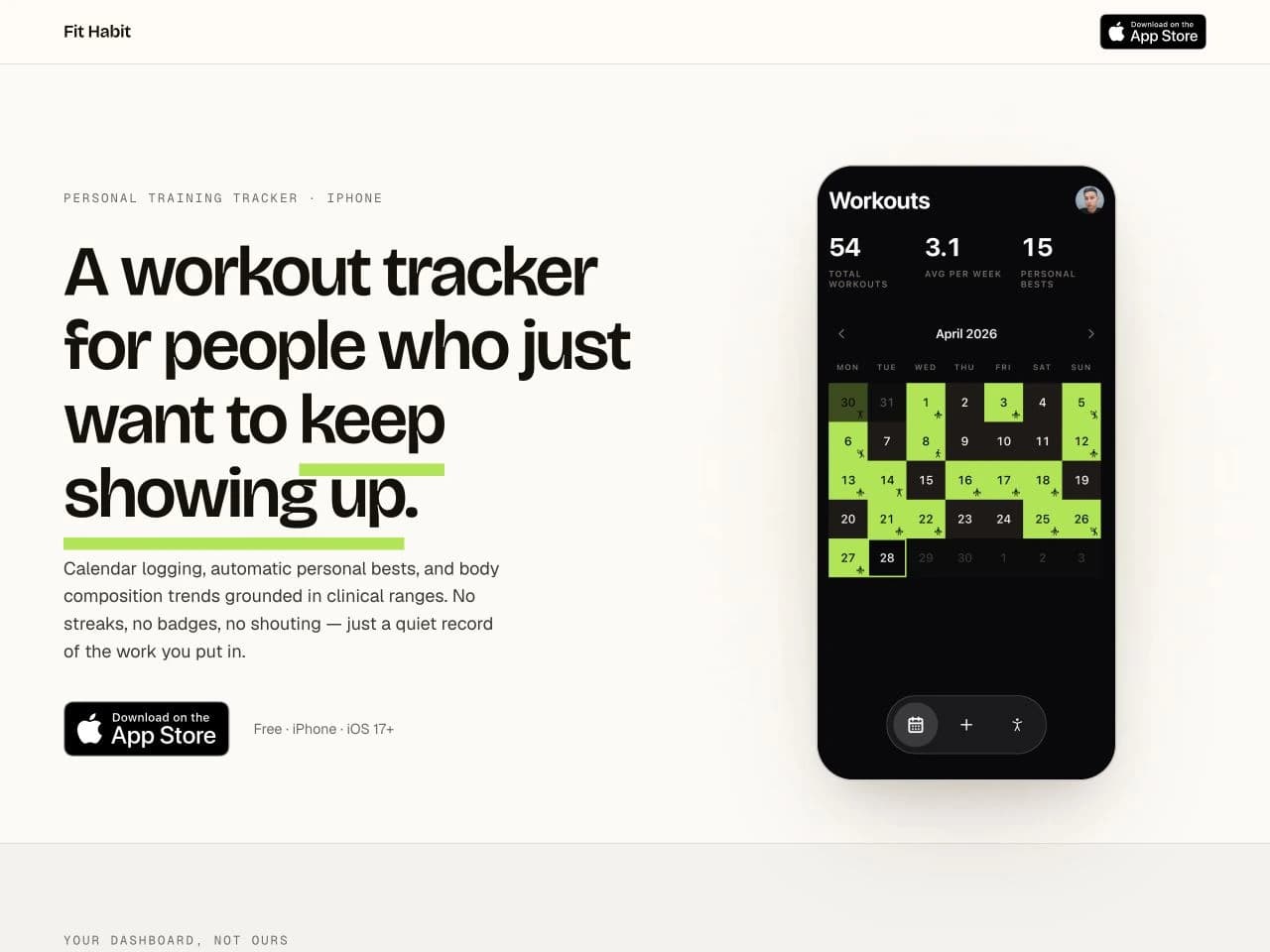
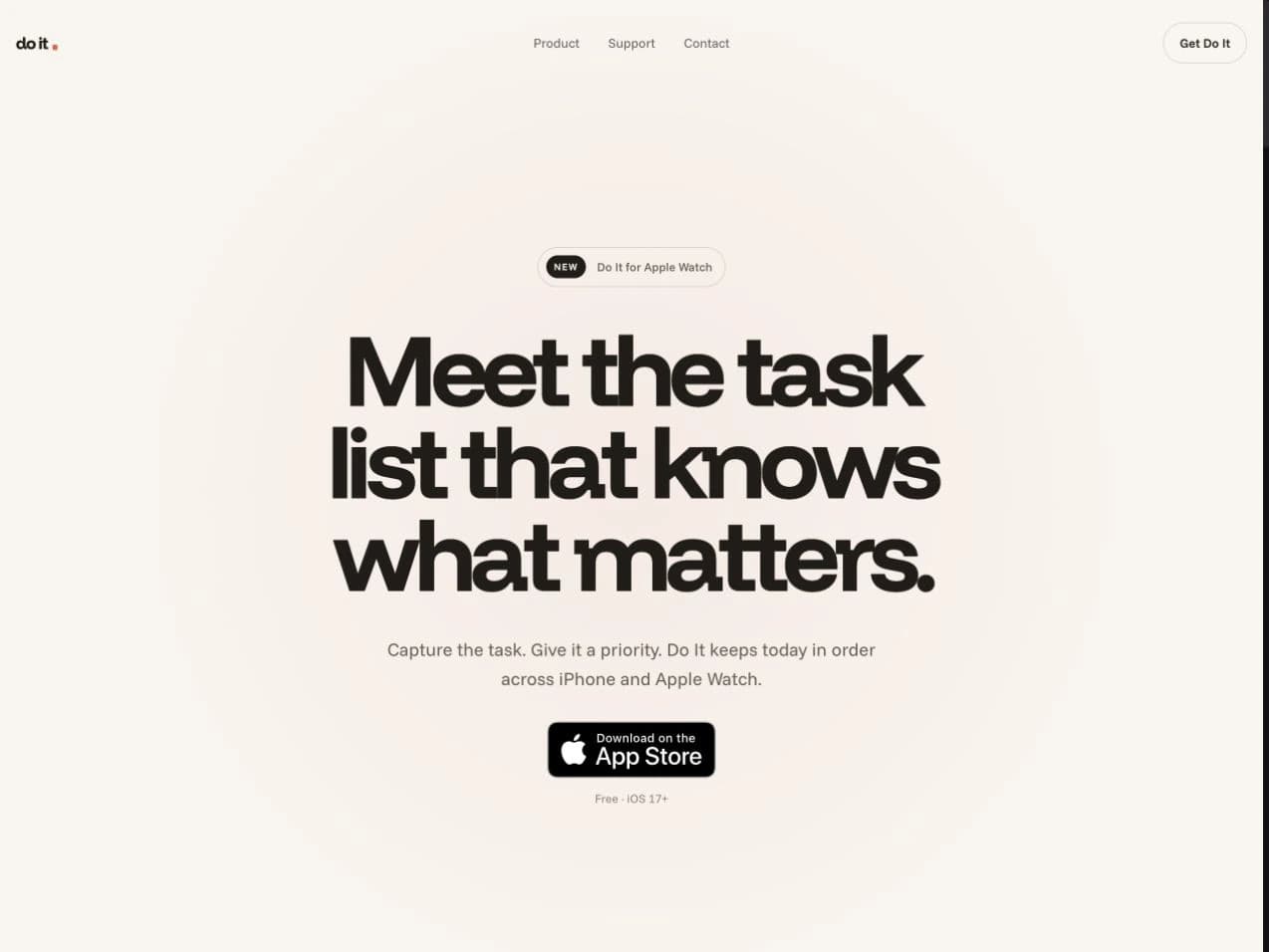
Piggy
A European envelope budget that connects today's spending to the long-range financial outlook behind it.
- Role
- Product design & development · Codex
- Year
- 2026 · Web + native iOS
Piggy started years before I could build it. I use YNAB every day, and in 2019 I made a mobile redesign to explore the product I wanted it to become. The core envelope model was still right, but the rest of my financial life sat outside it: European bank accounts, investments, a mortgage, retirement and the long view of where all of it was heading.
Codex changed the cost of acting on that old design exploration. I could finally build the budgeting app I had wanted instead of another static redesign, first as a full web product and then as a native SwiftUI companion for iPhone and iPad.
A budget with a horizon
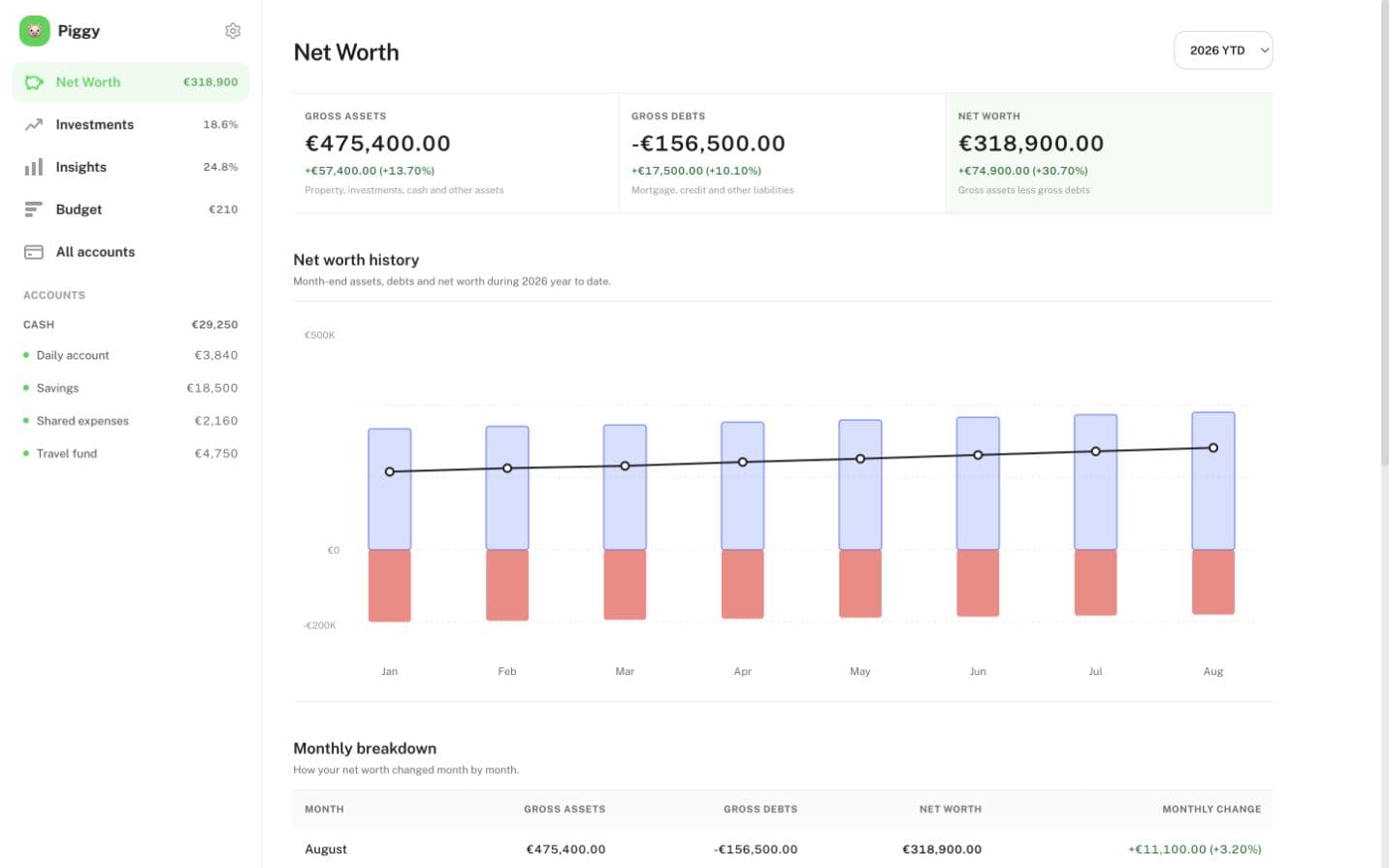
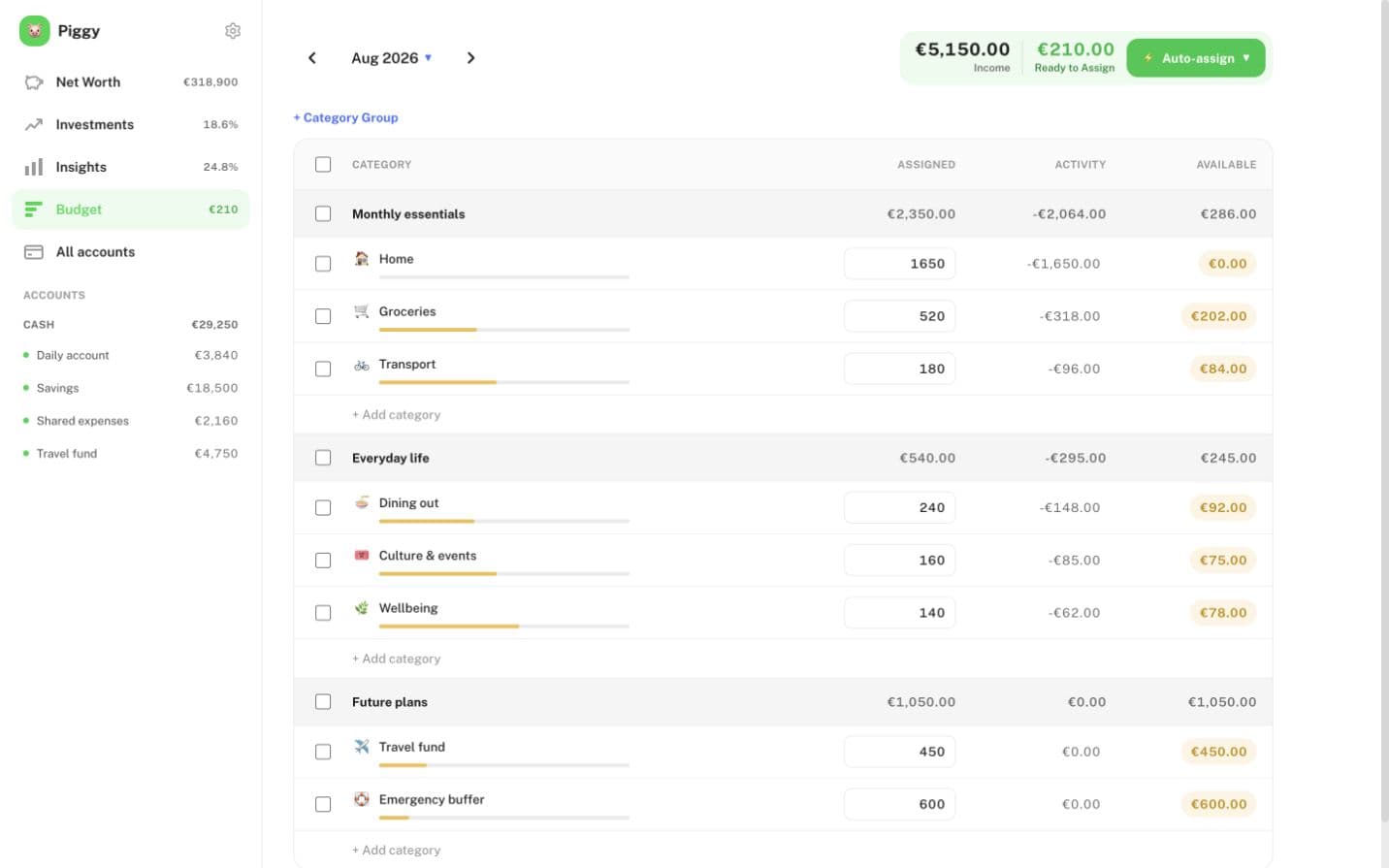
The monthly budget is still grounded in cash. Money is assigned to categories, spending is measured against it, and transactions are reviewed as they arrive. Piggy then extends the same model into net worth and financial independence. Cash, investments, retirement accounts, property and liabilities sit in one outlook, with contributions and spending carried into a long-range forecast.
That connection matters more to me than another budgeting feature. A decision this month can be seen in the context of a mortgage, a pension and the date when work becomes optional. Short-term discipline and long-term freedom become the same interface.
Built around European financial life
Piggy connects directly to bunq and ABN AMRO for balances and booked transactions, and uses read-only IBKR reports for investments. It can classify new transactions from prior budgeting behavior while keeping the final review with the person who owns the budget. Mortgage balances and retirement statements join the same model when an API cannot provide the history cleanly.
The web app runs on Next.js and Supabase. The native SwiftUI app uses the same authenticated product data, caches the latest view for offline access, and locks with Face ID after time away. Building both with Codex pushed the work beyond a prototype: real bank authorization, encrypted connections, dense financial tables, interactive charts and a product that has to earn trust every time it shows a number.